
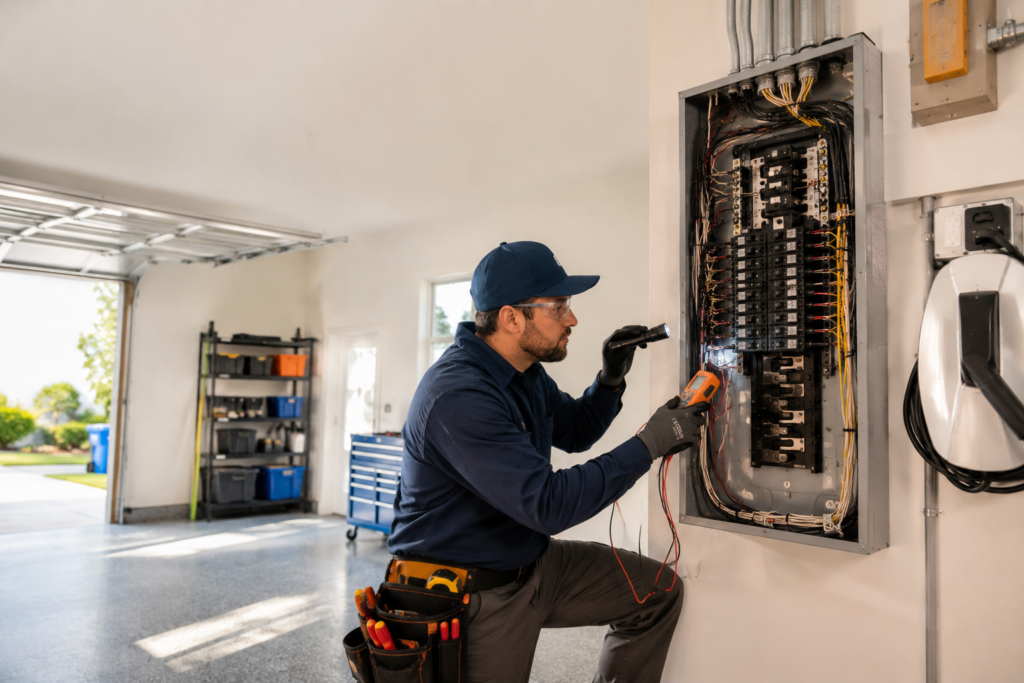
If your lights flicker every time the microwave kicks on, your breakers trip more than they used to, or your home inspector flagged an old fuse box, you’ve probably started asking the same question a lot of homeowners ask: how much does it actually cost to replace an electrical panel?
The honest answer is “it depends” – but not in a vague, dodge-the-question way. The final number comes down to a handful of specific factors, and once you know what they are, you can get a pretty accurate estimate before an electrician ever sets foot in your house. Here’s the full breakdown.
Average Cost to Replace an Electrical Panel in 2026
Most homeowners pay somewhere between $1,800 and $4,500 for a full electrical panel replacement, with the national average landing around $2,800. That said, this is a wide range for a reason – a straightforward 100-amp to 200-amp swap in an easily accessible garage is a very different job than a service upgrade that requires trenching, permitting, and coordination with the utility company.
Here’s a rough breakdown by scope:
- Simple panel swap (same amperage, same location): $1,500 – $2,500
- Amperage upgrade (e.g., 100-amp to 200-amp): $2,000 – $4,000
- Panel replacement plus service line/meter upgrade: $3,500 – $6,500+
- Panel relocation (moving it to a new spot in the home): $4,000 – $8,000
If you’ve also looked into repair costs, you may have noticed the numbers are quite different from replacement – repairing a panel typically runs cheaper for minor issues but can escalate quickly. Our guide on how much it costs to repair an electrical panel breaks down exactly where that line sits, and it’s worth reading before you commit either way.
What Actually Drives the Price
1. Panel Amperage
Older homes were often built with 60-amp or 100-amp service, which was fine for a mid-century household but struggles under the load of modern HVAC systems, EV chargers, and home offices full of electronics. Upgrading to 200-amp (now the standard for most new construction) costs more than a like-for-like swap because it usually requires new wiring, a larger breaker box, and sometimes a heavier service line from the street.
2. Panel Brand and Type
Not all panels are priced the same. A basic breaker panel from a standard manufacturer might cost $150–$400 for the unit itself, while smart panels with app-based monitoring and load management can run $2,000–$4,000 before labor. Most homeowners don’t need a smart panel, but if you’re planning solar, battery storage, or an EV charger down the road, it’s worth discussing upfront.
3. Permits and Inspection
Nearly every municipality requires a permit for panel work, and for good reason – this is one part of the house where mistakes are genuinely dangerous. Permit fees typically add $150–$500 depending on your city, and the job isn’t considered complete until it passes inspection. Any licensed electrician quoting your job should already be factoring this in.
4. Utility Coordination
If your amperage is increasing, the utility company often needs to upgrade the service drop or meter to match. This step is outside your electrician’s direct control and can add days to the timeline, even if it doesn’t always add much to the cost.
5. Accessibility and Code Compliance
A panel in an unfinished garage is a quick job. A panel buried behind finished drywall, or one that no longer meets current code (grounding, clearance, AFCI/GFCI requirements), takes more labor – and sometimes uncovers additional work once the electrician opens things up.
6. Panel Repair vs. Replacement
Sometimes what looks like a “replace the whole panel” job is actually fixable with targeted repair work – a bad breaker, a loose lug, or corrosion damage. If you’re not sure which category your situation falls into, our comparison on electrical panel repair vs. replacement walks through the signs that point to each option, so you’re not paying for a full replacement when a repair would do – or the reverse.
Signs You Probably Need a Replacement, Not a Repair
- Your panel is a Federal Pacific, Zinsco, or Challenger brand (all have known safety issues and are difficult to insure)
- Breakers trip frequently, even under normal loads
- You smell burning or see scorch marks near the panel
- The panel still uses fuses instead of breakers
- You’re adding major appliances, an EV charger, or a home addition and your current amperage can’t support it
- Your home inspector or insurance company flagged the panel
If two or more of these apply, replacement is very likely the more cost-effective long-term choice, even though the upfront number is higher than a repair.
How Long Does It Take?
A standard panel replacement usually takes 4–8 hours for the electrical work itself, though the full project timeline – including permitting and inspection – can stretch to 1–3 weeks. Power is typically shut off for a few hours during the swap, so plan around that if you work from home.
Ways to Manage the Cost
- Get multiple quotes. Panel replacement pricing varies more than people expect between contractors in the same city, so two or three quotes gives you a realistic range instead of guessing.
- Bundle related work. If you’re already upgrading the panel, it’s often more efficient – and cheaper per project – to handle other electrical upgrades at the same time. For example, pairing a panel upgrade with surge protector installation protects your new panel and everything downstream of it from voltage spikes, for a fraction of what it would cost as a separate visit.
- Ask about financing. Many licensed electrical contractors offer payment plans for larger jobs like panel and service upgrades.
- Time it with other home projects. If you’re already planning a wiring system modernization or an energy efficiency audit, doing the panel replacement alongside that work can reduce redundant labor costs.
Panel Upgrade vs. Full Replacement – Are They the Same Thing?
Not quite. A panel upgrade usually refers to increasing amperage capacity (say, 100-amp to 200-amp) while keeping the general location and setup similar. A full replacement can mean swapping out an old or damaged panel at the same amperage. Pricing overlaps significantly between the two, but if you’re specifically looking to increase your home’s capacity, our dedicated page on electrical panel upgrades covers what that process looks like and what it typically costs in more detail.
If your immediate concern is a broken breaker rather than the whole panel, our breaker panel replacement service page covers that narrower (and usually less expensive) job specifically.
Local Considerations
Panel costs can shift based on your city’s permit fees, inspection turnaround, and local utility requirements. If you’re in the Fremont, Sunnyvale, or Palo Alto area, you can find more specific guidance on our Fremont electrical upgrades, Sunnyvale electrical upgrades, and Palo Alto electrical upgrades pages, which walk through what homeowners in those specific cities typically pay and how long permitting tends to take.
The Bottom Line
Replacing an electrical panel isn’t a small expense, but it’s one of the few home improvements that pays for itself in safety, insurability, and future-proofing your home for the electrical demands of the next decade – EVs, heat pumps, and home batteries included. Most homeowners land somewhere between $1,800 and $4,500, with amperage, panel type, and accessibility being the biggest swing factors.
If you’re not sure whether your situation calls for a repair or a full replacement, the safest first step is a professional assessment rather than guessing from a price range online. Get in touch with our team for an on-site evaluation and an accurate quote for your specific home.
Leave a Reply