
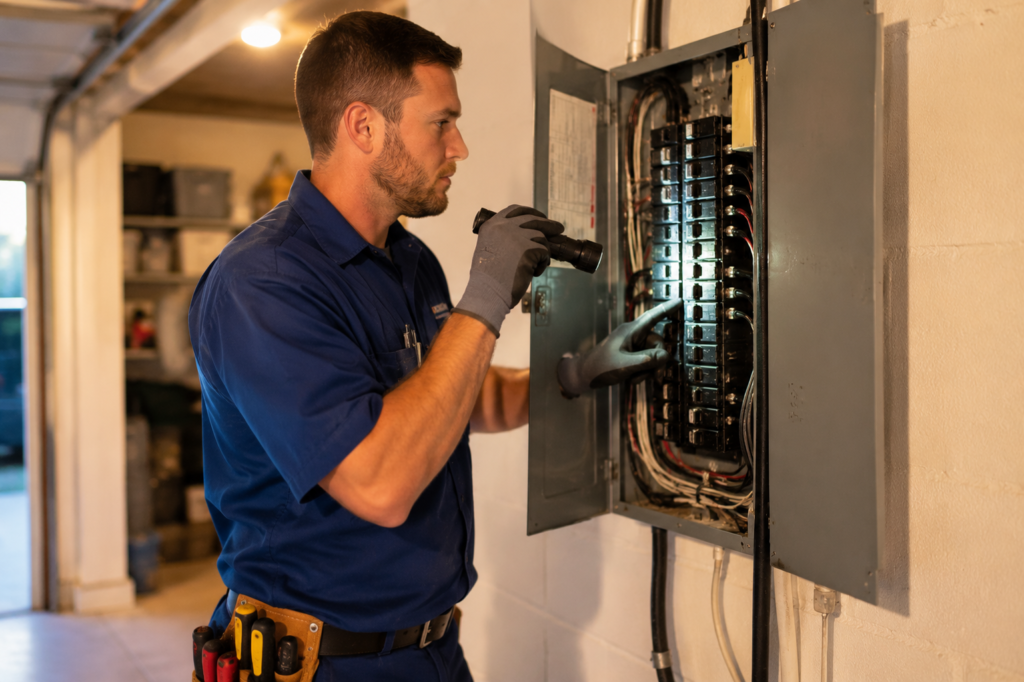
Your circuit breaker trips again. The lights in the kitchen flicker every time you run the microwave. You notice a faint burning smell near the electrical box – and now you’re staring at that gray metal panel wondering whether you need a simple fix or a full replacement.
It’s one of the most common questions we hear from homeowners across San Jose, Fremont, and the Bay Area: repair or replace? The honest answer depends on your panel’s age, condition, and what’s actually causing the problem. Get it right and you save money. Get it wrong and you either pay for a repair that doesn’t last – or you delay a replacement that your home genuinely needs.
This guide walks you through everything you need to know to make that decision confidently.
What Does an Electrical Panel Actually Do?
Before diving into repair vs. replacement, it helps to understand what’s at stake. Your electrical panel – also called a breaker box or load center – is the central hub of your home’s electrical system. It receives power from the utility company and distributes it across individual circuits throughout your home.
Each circuit is protected by a breaker. When a circuit is overloaded, the breaker trips, cutting power to prevent overheating or fire. That protection is the whole point. When the panel itself starts failing, it can no longer protect your home reliably – and that’s when things get dangerous.
Signs You Probably Need a Repair (Not a Full Replacement)
Not every panel problem requires a full replacement. In many cases, the underlying issue is isolated — a single failing breaker, a loose connection, or a damaged component — and a targeted repair is the right call.
One breaker keeps tripping. If a single breaker repeatedly trips under normal load (not when you’re running heavy appliances), the breaker itself has likely worn out. Individual breakers can be replaced without touching the rest of the panel. This is a straightforward repair.
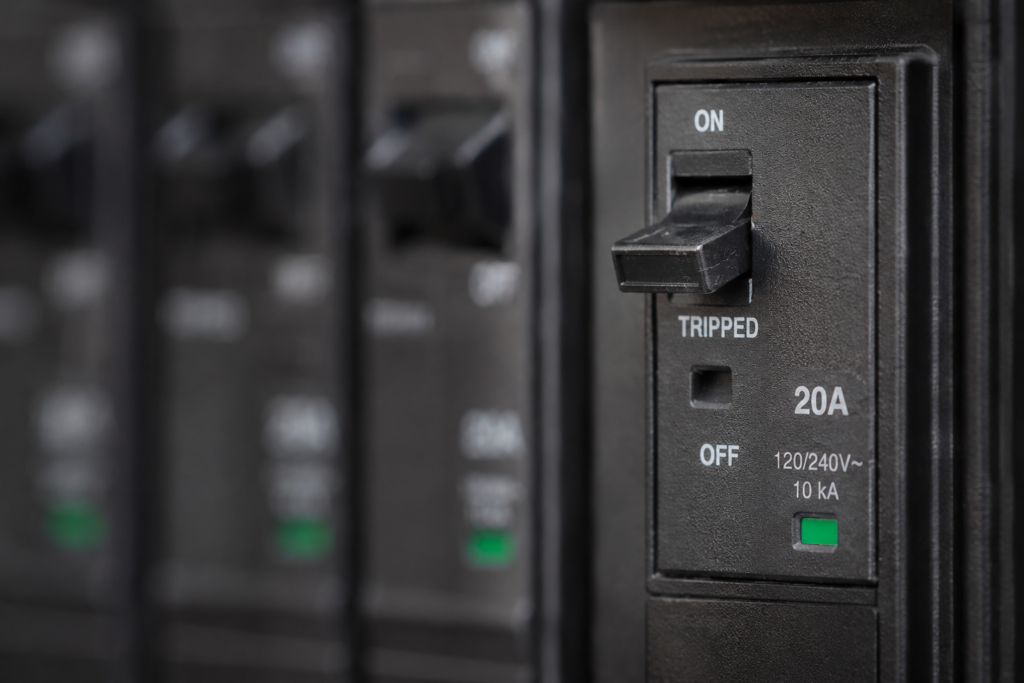
A breaker won’t reset. If a breaker trips and refuses to hold in the “on” position, it’s usually a sign that the breaker has failed – not the entire panel. A licensed electrician can swap it out in under an hour.
One circuit has no power. If power has gone out in a specific room or area but the rest of the house is fine, a faulty breaker or a loose wire at the panel is often the culprit. Again, this is typically a repair.
Minor corrosion on one component. Light surface corrosion on a single breaker or terminal – not widespread throughout the box – can sometimes be addressed without full replacement.
Your panel is less than 15 years old and otherwise in good shape. Newer panels from reputable manufacturers that haven’t been mishandled usually don’t need full replacement for isolated issues.
If any of these match your situation, contact a licensed electrician for a panel inspection before assuming the worst. Our team serves homeowners across the Bay Area, including electrical upgrades in Fremont and electrical services in Los Gatos.
Signs You Probably Need a Full Replacement
There are situations where repairs are a band-aid on a bigger problem. A full panel replacement becomes necessary – and genuinely urgent – in the following cases.
Your panel is 25 to 40+ years old. Most electrical panels are designed to last 25–40 years. An older panel may still function, but it may no longer meet modern electrical codes, can’t handle today’s energy demands, and its components are prone to failure. At this age, the question isn’t if you’ll need to replace it – it’s when.
You have a Federal Pacific Electric (FPE) or Zinsco panel. These brands are widely considered defective and dangerous. FPE Stab-Lok panels, common in homes built between the 1950s and 1990s, have a documented history of breakers that fail to trip during overloads – creating serious fire risks. If you have one of these panels, replacement is the recommendation, full stop.
You’ve experienced burning smells or scorch marks. Visible burn marks, melted plastic, or a persistent electrical burning smell near the panel are serious warning signs. These indicate arcing – electricity jumping between contacts – which can ignite a fire inside the wall or the panel itself. This is an emergency situation, not a repair job.
Your panel buzzes, hums, or makes crackling noises. A healthy panel is essentially silent. Buzzing or humming sounds indicate loose connections or breakers struggling to handle their load. Crackling points to arcing. Both warrant immediate professional attention, and often replacement.
Breakers trip constantly across multiple circuits. If you’re regularly losing power in multiple areas of the home and resetting breakers has become part of your daily routine, your panel is likely undersized for your home’s current electrical load. Modern households use significantly more electricity than they did 30 years ago – EVs, home offices, HVAC systems, and smart home devices all add up.
You’re planning a major renovation or adding significant load. If you’re adding an EV charger, finishing a basement, upgrading your kitchen, or installing solar, your existing panel may not have the capacity. Rather than patch an undersized panel, upgrading to a 200-amp service from the start is the smarter and often code-required move. Our electrical panel upgrade service is designed specifically for these situations.
You only have 100-amp service. Homes with 100-amp panels were built for a much lighter electrical load than what modern families demand. While 100-amp service was standard for decades, it’s now considered the minimum – and for most Bay Area households, it simply isn’t enough.
The Cost Comparison: Repair vs. Replacement
Here’s the financial reality homeowners need to understand:
Panel repairs – replacing a breaker, fixing a loose connection, addressing a single failed component – typically run $150 to $500 depending on the issue.
Full panel replacement – upgrading to a new 200-amp panel, including labor, permits, and materials – typically runs $1,500 to $4,500 in the Bay Area. The range depends on the size of the upgrade, your home’s existing wiring, and local permit requirements.
The temptation is to choose the cheaper repair. But if your panel is 35 years old and already showing multiple warning signs, spending $400 on a repair today and $3,000 on a full replacement in 18 months costs you more than doing the replacement now. An experienced electrician can tell you honestly which situation you’re in.
Our team serves homeowners in Palo Alto, Campbell, and across the South Bay – and we always give you a straight answer on what your home actually needs before any work begins.
What Happens During a Panel Replacement?
If replacement is the right call, here’s what to expect. The process is more involved than a repair, but it’s a well-established job for a licensed electrician.
Assessment and permitting. In California, an electrical permit is required for panel replacement. Your electrician pulls the permit and submits the installation plan to your local building department.
Utility coordination. The power company needs to disconnect service to your home while the work is done. Your electrician schedules this in advance.
Installation day. The old panel is removed, the new panel is mounted, and all circuits are reconnected to the new breakers. A 200-amp panel upgrade typically takes one full day.
Inspection. A city or county inspector signs off on the completed work. This protects you legally and ensures the installation meets current California electrical code.
Our breaker panel replacement service covers the full process – permits, utility coordination, installation, and inspection – so you don’t have to manage any of it separately.
One More Thing: When to Add a Subpanel Instead
Sometimes neither a simple repair nor a full main panel replacement is the best fit. If your main panel is in good condition but you’re running out of circuit capacity – or if you need to extend power to a detached garage, a new addition, or a workshop – a subpanel can be the right middle-ground solution. It adds capacity without requiring a full service upgrade.
If this sounds like your situation, our subpanel addition service is worth exploring.
The Bottom Line
Here’s the simple version: if the problem is isolated to one breaker or one connection and your panel is relatively new and in good condition overall, repair is likely the right move. If your panel is old, showing multiple warning signs, or simply can’t keep up with your home’s demands, replacement is the smarter investment.
The only way to know for sure is to have a licensed electrician inspect the panel in person. A quick visual look at the box from across the garage won’t tell you whether connections are loose, whether arcing has occurred inside the panel, or whether your breakers are actually tripping at the right amperage.
Grid Matters Electric serves homeowners throughout San Jose and the greater Bay Area. We provide honest assessments, pull all required permits, and handle everything from single breaker replacements to full 200-amp panel upgrades. Call us at (586) 571-8282 or request a free quote online – and stop guessing about what your home actually needs.
Leave a Reply