
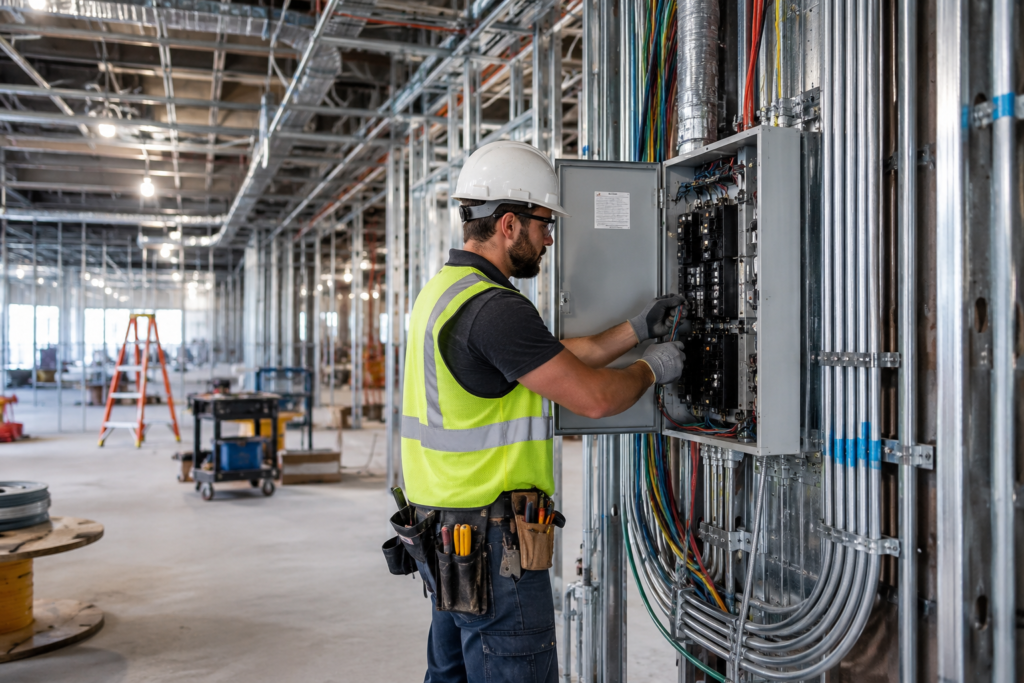
Whether you’re building out a new retail space, fitting out an office suite, or wiring a factory floor, commercial electrical installation is one of those projects that can make or break your opening timeline. Unlike a residential rewire, commercial work has to satisfy load calculations, code inspections, and often multiple trades working around your electrician at the same time. This guide walks through what actually happens during a commercial electrical installation, how long each phase takes, and what it typically costs – so you can plan your project with realistic expectations instead of guesswork.
What Counts as “Commercial Electrical Installation”?
Commercial electrical installation covers any electrical work done in a non-residential building – offices, retail stores, restaurants, warehouses, medical facilities, and factories. It includes everything from the main service panel and subpanels down to outlets, lighting circuits, HVAC connections, and specialized equipment wiring. The scope is almost always larger and more code-intensive than a home project, because commercial buildings are held to stricter fire, safety, and accessibility standards.
Common commercial installation projects include:
- New construction electrical rough-in and finish work
- Tenant improvement (TI) buildouts for retail and office spaces
- Panel and switchgear installation for increased load capacity
- Factory and warehouse electrical installation for heavy machinery
- Lighting retrofits and energy-efficient upgrades
- Data and low-voltage cabling alongside power circuits
The Commercial Electrical Installation Process, Step by Step
1. Site Assessment and Load Calculation
Every commercial project starts with an electrician evaluating the space, reviewing architectural and mechanical plans, and calculating the total electrical load the building will need. This step determines the size of your service panel, the number of circuits required, and whether the existing utility connection can support the new load. Skipping or rushing this step is the single biggest cause of budget overruns later in the project.
2. Permitting and Plan Review
Commercial electrical work almost always requires permits, and larger projects need stamped engineering drawings before the city will approve them. Permit timelines vary widely by jurisdiction – some cities turn around a permit in a week, others take four to six weeks for anything involving a panel upgrade or new service. Building this into your timeline early prevents costly delays once construction crews are on-site and waiting.
3. Rough-In Wiring
Once permits are approved, the rough-in phase begins: conduit, wire, and boxes go in before walls and ceilings are closed up. This is typically coordinated with framing, plumbing, and HVAC trades, since everyone needs access to the same wall cavities and ceiling space. Rough-in is usually the longest phase of the project, especially in larger commercial buildings or factory installations with heavy machinery circuits.
4. Inspection
Most jurisdictions require a rough-in inspection before walls can be closed. This confirms wiring is installed to code before it becomes inaccessible. Failing an inspection at this stage means opening the walls back up, so working with an electrician who knows local code well is worth the investment.
5. Panel and Equipment Installation
The main electrical panel, subpanels, and any specialized equipment (transformers, switchgear, generators) get set and connected. For factory or industrial installations, this is also when three-phase power and heavy equipment circuits are installed.
6. Trim-Out and Finish Work
Outlets, switches, light fixtures, and panel covers go in. This is the phase that makes the space look “finished” and functional.
7. Final Inspection and Utility Connection
A final inspection confirms everything meets code, and the utility company energizes the new service. Only after this step can the building legally operate on the new electrical system.
How Long Does Commercial Electrical Installation Take?
Timelines depend heavily on project size and permitting speed, but here’s a general range:
- Small tenant improvement (under 2,000 sq ft): 1–3 weeks of on-site electrical work
- Mid-size office or retail buildout: 3–6 weeks
- New commercial construction or factory installation: 2–6 months, often running in parallel with other trades
Permitting can add anywhere from one to eight weeks on top of the physical work, depending on your city and the complexity of the electrical plan.
Commercial Electrical Installation Cost Factors
Commercial electrical costs are quoted per project rather than as a flat rate, because so much depends on square footage, load requirements, and existing infrastructure. The main cost drivers are:
- Panel and service size – a building needing a full 400-amp or 3-phase service costs significantly more than a simple subpanel addition
- Square footage and circuit count – more outlets, lighting zones, and equipment connections mean more labor and material
- Existing conditions – retrofitting an older building is usually more expensive than wiring new construction, since crews have to work around existing walls and systems
- Specialized equipment – commercial kitchens, medical equipment, and industrial machinery all require dedicated circuits and often additional permitting
- Local labor rates and permit fees – these vary by city and can meaningfully shift the total
Getting a site visit and a written estimate is the only reliable way to know your actual number, since commercial jobs vary too much for a single price range to be useful.
Choosing an Electrical Contractor for Commercial Work
Not every residential electrician is licensed or experienced for commercial-scale work. When vetting a contractor for a commercial electrical installation, look for:
- A commercial electrical contractor license (separate from a residential license in most states)
- Experience with your building type – a factory installation calls for different expertise than an office buildout
- Familiarity with your local permitting office, which can meaningfully speed up approvals
- Clear documentation of load calculations and panel sizing before work begins
Related Guides and Services
If your project involves upgrading your electrical panel to support new commercial load, our electrical panel upgrade and breaker panel replacement services cover the panel side of a commercial installation in more detail.
For buildings with older wiring that needs to be brought up to current code before a buildout, see our wiring system modernization service.
Commercial spaces with sensitive equipment or frequent power fluctuations should also consider surge protector installation as part of the project scope, and buildings looking to control long-term operating costs can pair a new installation with an energy efficiency audit.
If your project is based in the Los Angeles area, we’ve also put together a dedicated walkthrough of what to expect from a commercial electrical installation in Los Angeles, covering local permitting specifics.
And if you’re weighing whether to upgrade your existing panel versus replacing it entirely as part of a larger commercial project, our guide on electrical panel repair vs. replacement breaks down the decision factors, though written with residential examples the underlying logic applies to smaller commercial panels too.
Get a Commercial Electrical Installation Quote
Every commercial building has different load requirements, timelines, and code considerations, so the best next step is a site visit and a written estimate based on your specific space. Contact our team to schedule an assessment and get a realistic timeline and cost breakdown for your project.
Leave a Reply