Silicon Valley doesn’t see hurricanes or ice storms, but it isn’t immune to power interruptions. Planned PG&E Public Safety Power Shutoffs (PSPS) during wildfire season, aging grid infrastructure, and rolling summer brownouts have made whole-home backup generators one of the fastest-growing requests we get from homeowners in San Jose, Fremont, Sunnyvale, and Palo Alto. If you’ve been thinking about installing one, here’s what actually goes into the decision – from sizing the unit correctly to what installation day looks like.
Why More Bay Area Homeowners Are Installing Backup Generators
A decade ago, backup power was mostly a concern for homes in rural or storm-prone areas. That’s changed. Between PSPS events triggered by high fire-danger conditions and grid strain during heat waves, even homes in well-maintained suburban neighborhoods can lose power for hours – sometimes days – with little warning.
For households with medical equipment, home offices, security systems, or refrigerated medication, an unplanned outage isn’t just an inconvenience. And with more homes running EV chargers, smart thermostats, and home automation systems, the cost of “just waiting it out” keeps climbing. A properly sized standby generator removes that risk entirely, switching on automatically within seconds of an outage.
Portable vs. Standby: Why “Whole-Home” Matters
Not all backup generators are created equal, and this is where a lot of homeowners get tripped up before calling an electrician.
Portable generators are the gas-powered units you wheel out of the garage and connect with extension cords. They’re inexpensive upfront, but they require you to be home to set them up, can only run a handful of circuits at a time, and need to be refueled manually every several hours. They also can’t legally or safely power your home’s full electrical panel without a transfer switch.
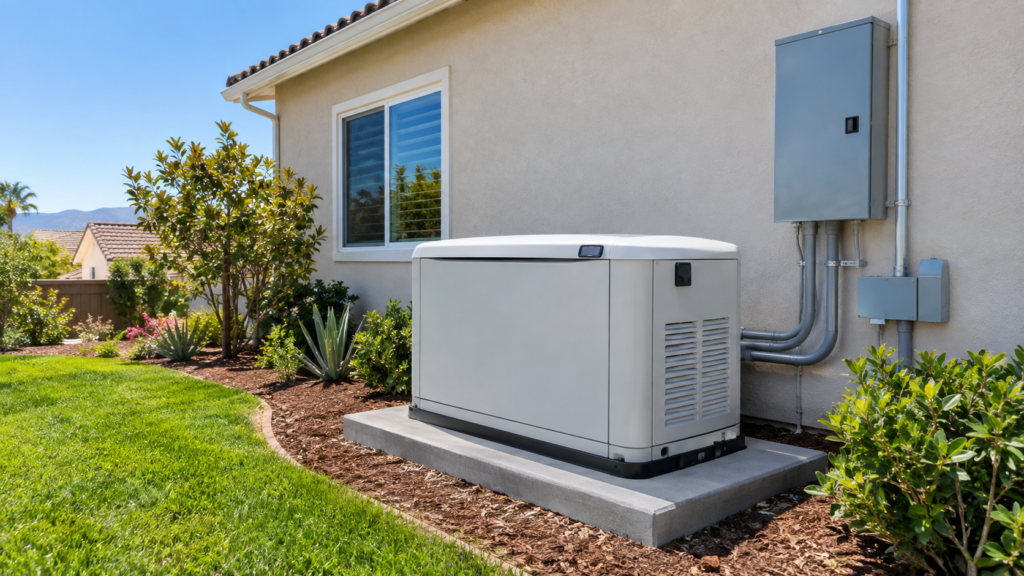
Whole-home standby generators are permanently installed outside the house, wired directly into your electrical panel through an automatic transfer switch, and typically run on natural gas or propane. When the grid goes down, the transfer switch senses the outage and starts the generator automatically – often before your refrigerator has a chance to warm up. No extension cords, no manual startup, no standing outside in the dark.
For most homeowners asking about “whole-home generator installation,” this is the system they actually want: something that keeps the whole house – HVAC, refrigerator, garage door, home office, and security system – running without anyone lifting a finger.
How Backup Generators Are Sized
Sizing is the single most important part of this project, and it’s not something to guess at. A generator that’s too small will trip under load or fail to start high-draw appliances like air conditioning compressors and well pumps. One that’s oversized wastes money on equipment and installation you don’t need.
Sizing comes down to a few factors:
- Total home square footage and HVAC load. Central air conditioning is usually the single biggest draw in a Bay Area home, and it heavily influences whether you need an 11kW, 16kW, 20kW, or larger unit.
- Essential vs. full-house coverage. Some homeowners only want critical circuits covered – refrigerator, sump pump, a few outlets, and the furnace. Others want the entire panel backed up, including EV chargers. This is a major cost and sizing variable.
- Starting (surge) wattage vs. running wattage. Appliances like AC compressors and well pumps draw significantly more power the instant they start than they do while running. A proper load calculation accounts for this surge, not just steady-state draw.
- Future load additions. If you’re planning to add an EV charger, pool equipment, or a home addition in the next few years, it’s worth sizing the generator – or at least the transfer switch – with that headroom in mind now, rather than replacing equipment later.
We run a full load calculation on-site before recommending a generator size – this isn’t something that should be estimated over the phone or from a spec sheet alone.
What Installation Day Actually Looks Like
Whole-home generator installation is a bigger project than most electrical upgrades, but it’s typically completed faster than homeowners expect.
- Site assessment and permitting. We evaluate your electrical panel, gas line capacity (or propane tank placement), and the best exterior location for the unit – one that meets manufacturer clearance requirements and local setback codes. Permits are pulled before any work begins.
- Concrete pad or mounting pad installation. The generator sits on a dedicated pad outside the home, positioned away from windows and doors per code.
- Electrical and gas connection. This is where licensed electrical work matters most: running conduit from the generator to an automatic transfer switch installed next to your main panel, and coordinating with a gas contractor if a new gas line is required.
- Transfer switch installation and panel integration. The transfer switch is wired to isolate your home from the grid the instant an outage is detected, preventing dangerous backfeed to utility lines – a safety step that also protects utility workers.
- Testing and commissioning. We test a full simulated outage to confirm the generator starts automatically, the transfer switch engages cleanly, and every circuit you intended to back up is actually receiving power.
- Homeowner walkthrough. You’ll learn how the weekly self-test cycle works, what maintenance is needed, and how to manually operate the system if needed.
Most installations take one to two days of on-site work, though permitting timelines with local jurisdictions can add a few weeks before installation can begin.
What Backup Generator Installation Costs
Costs vary based on generator size, whether full-house or partial coverage is chosen, and site-specific factors like gas line upgrades or panel age. In general, homeowners in our service area should expect:
- Smaller units covering essential circuits tend to fall on the lower end of the range, suitable for homes prioritizing refrigeration, a few lights, and a sump or well pump.
- Mid-size whole-home units covering HVAC and most of the panel represent the most common installation we complete.
- Larger units covering full-panel loads, including EV charging, sit at the higher end, particularly in homes with older electrical panels that need upgrading to support the new load.
Panel age is worth calling out specifically: if your home still has an older or undersized panel, a generator installation is often the right time to pair it with a panel upgrade, since the transfer switch and generator both depend on a panel that can safely handle the added capacity. We always flag this during the site assessment rather than after work has started.
Is a Whole-Home Generator Worth It?
For most homeowners in San Jose, Fremont, Sunnyvale, and Palo Alto dealing with PSPS events or grid instability during heat waves, the answer comes down to how much an outage actually costs you – in spoiled food, medical risk, remote-work downtime, or simple peace of mind. Unlike a portable unit sitting in the garage, a properly sized and installed standby generator works whether you’re home, asleep, or traveling.
If you’re weighing this decision, the best next step is a proper load assessment rather than picking a generator size off a website chart. Every home’s panel, gas access, and circuit priorities are different, and getting the sizing right the first time avoids either an underpowered system or an overpriced one.
Ready to find out what size generator your home actually needs? Contact Grid Matters Electric for a free on-site assessment. If you’re also dealing with an aging electrical panel, take a look at our electrical panel upgrade service — generator installations and panel upgrades are frequently paired together. Homes with outdated wiring may also want to review our wiring system modernization and surge protector setup services, both of which protect the same electrical system a generator relies on. We proudly serve homeowners in Fremont, Sunnyvale, Palo Alto, and throughout the greater San Jose area.
Leave a Reply